
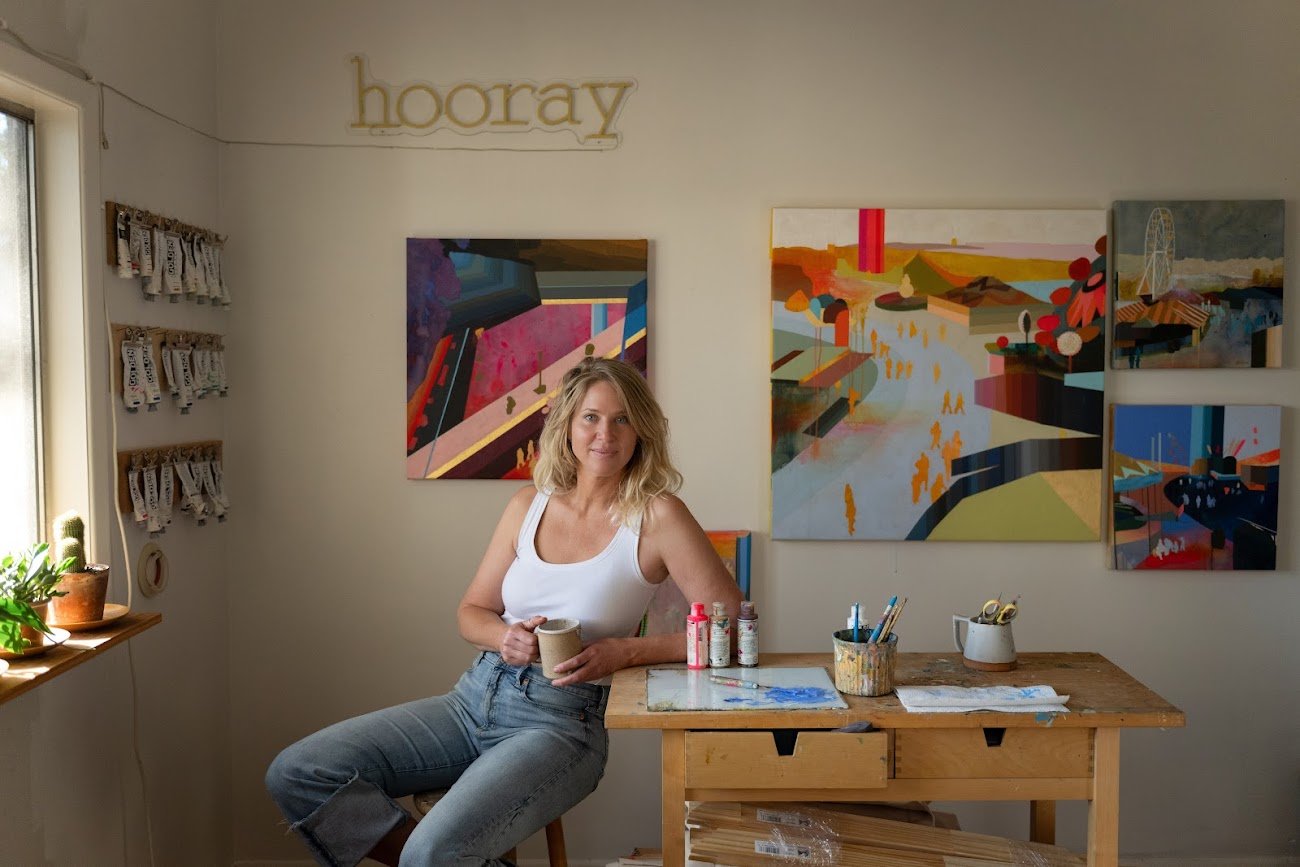
An interview with American interdisciplinary artist Kate Hooray Osmond on spatial detachment, scale as a visual language, yielding control to raw materials, and finding terror and beauty in an unsettled world.
What if the way we see the world changes the moment we lose our footing?
From the cockpit of a helicopter or high atop a shipping crane, Charleston-based interdisciplinary artist Kate Hooray Osmond trades familiar grounding for a view where time slows, systems come into focus, and human habits fall away. Yet her practice refuses to stay at altitude. One moment she is tracing the sprawling geometry of an industrial paper mill or standing before melting glaciers at the North Pole; the next, she is studying the quiet architecture of a dead insect or translating unseen molecular structures into paint.
Across series like SPECTRA, Dead Bugs, and her ongoing American Experience body of work—alongside institutional presentations including Beautiful Everything Now at the Columbia Museum of Art, Fruiting Bodies at the University of Northern Colorado, and exhibitions at the Gibbes Museum of Art—Osmond treats scale as both a visual language and a philosophical test. Even her materials push back: rainstorms, dust, algae-stained cloth, and velvet force her to relinquish control and build from what arrives uninvited.
In the conversation that follows, Osmond opens up about aerial detachment, fractal self-similarity, surrendering intention on the canvas, holding grief and beauty together in a changing climate, and why paying close attention to what we overlook is an act of care.
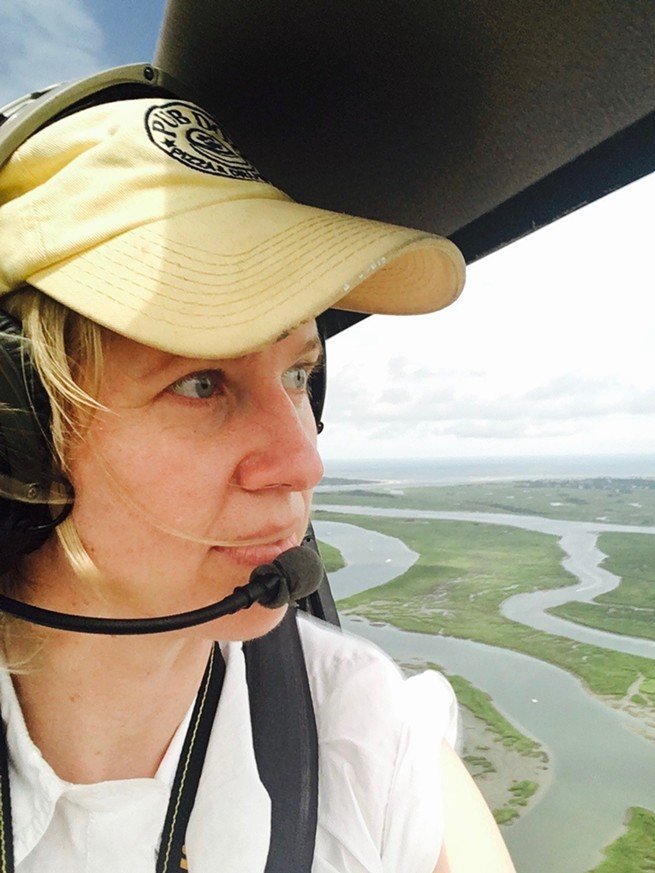
The Artiscape: You’ve taken to helicopters, shipping cranes, and ships to view landscapes. How does changing your physical position high above the ground alter your psychological relationship to the subject matter before you paint it?
Kate Hooray Osmond: Humans were never meant to fly, sadly. Leaving the surface of the Earth and flying high above everything that I have known triggers a short inside of me. It forces me to abandon any sense of personal grounding and, in that, allows me to also abandon habits of thought and practice. I cannot connect or even see other people; I cannot feel gravity in the way I am used to. In the air, I am new because I have left behind many definitions of my human-ness. In the air, time stops and I am left only to witness life as almost perfectly still. From above, everything is beautiful and welcome and true. Everything is part of a system; everything is connected.
The Artiscape: Your work spans the monumental down to the microscopic—from aerial landscapes to molecular structures in SPECTRA and insect remains in Dead Bugs. How do you navigate shifts between massive industrial/natural scales and intricate, overlooked details?
Osmond: In mathematics, there is a facet of fractal theory called “self-similarity.” Generally speaking, this means that the behaviour of very small things matches the behaviour of very large things because they are made of the same stuff. Think of the way an atom and its electrons resemble a solar system with its planets. In my process, I am practising how I see. When I paint a giant paper mill within an industrial site, I am paying attention to how the buildings connect with one another and how vehicles move within that territory.
I am practising that similar attention when I am painting a tiny dead bug: tracing how a leg connects to an abdomen or wondering why the antennae are shaped the way they are. How we do one thing is how we do everything, and I am trying to notice and to appreciate and to accept in everything I do.
The Artiscape: You paint on diverse surfaces like velvet, linen, and even algae-stained canvas, letting gravity and viscosity play a role. How much control do you yield to these raw materials and natural processes during your painting workflow?
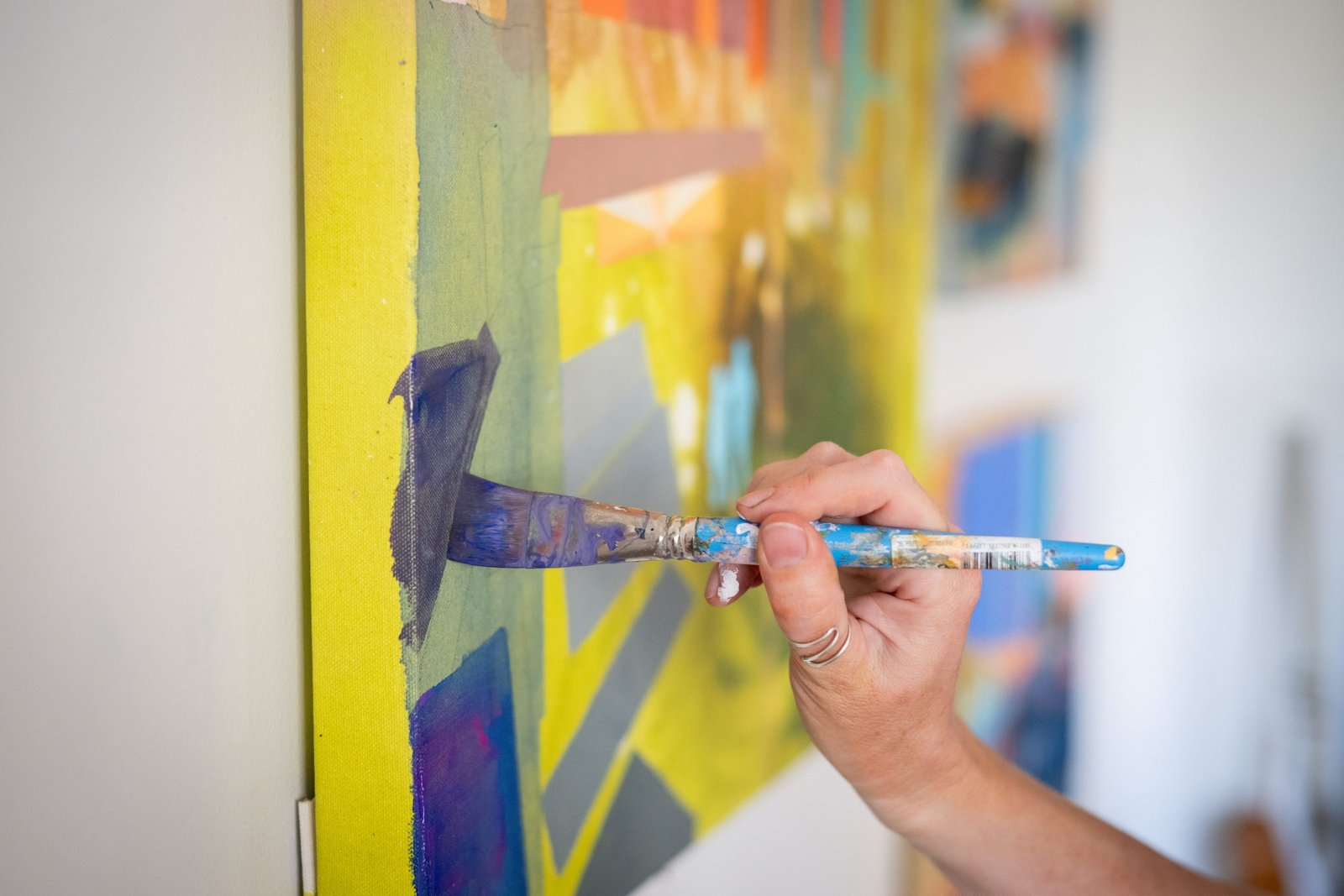
Osmond: I think one of life’s most beautiful lessons for people is that we have far less control in our lives than we think. I have a controlling nature; I have intentions and I like to see those intentions through to the end. In order to question that habit of mine and to play with it, I experiment with letting go in each painting. I will apply a ground in a way that leaves most of the visual results up to nature. This may involve an obliging rainstorm that will scatter my paints all over the canvas when I leave it outside for a night, or perhaps I will drag a blank canvas through a dusty pile of rocks. The marks and colours that rest on the fabric become the launching point for the composition. I am creating conditions in which I have to create from what I am given. I have to make do. Sometimes this presents a real challenge. But it is an important lesson to practise.
The Artiscape: Your work explores how “beauty can coexist with terror.” Can you walk us through a specific piece where these opposing forces meet, and how you strike that tension visually?
Osmond: I have a piece titled The Long, Quiet, Thankful Goodbye that is included in the show Beautiful Everything Now at the Columbia Museum of Art. The painting depicts three figures in an unsettled landscape of blues and whites. For the composition, I travelled to the North Pole to see the melting glaciers. The moments there up north and the resulting painting process nearly broke me. But it was important to consider with each brushstroke the lessons of acceptance, of non-judgement, and of love. I consider this painting a farewell letter to a world that my children will never experience because everything changes. And there is a terrible beauty in that. I can work for change that I want to see, but I must accept my current reality in order to be able to do that.
The Artiscape: In series like Dead Bugs, you transform subjects that are usually ignored into focal points of close study. What does this impulse to catalogue and preserve small everyday fragments say about your broader visual philosophy?
Osmond: Insects are everywhere. At least they were. I like to practise a philosophy that holds that everything is important. In that thread, every living thing is equal and deserving of respect. Insects are among us in our interior and exterior spaces, and yet our culture tries to negate that relationship. Most dead bugs that we find have not died of natural causes—it is difficult to find a dead bug in the forest because they are part of the nutrient cycle. When we find them on the pavement or on our windscreen or gasp in our home, they have perished from a poison or a squashing. That is a terrible way to die, and I paint them to create an archive of respect and notice. I notice them and depict them in a way that asks the viewer to notice them as well.
I regularly receive photos of dead bugs from others who have begun to notice them as well.
The Artiscape: With upcoming and recent presentations like Beautiful Everything Now at the Columbia Museum of Art and Fruiting Bodies at the University of Northern Colorado, how have these curated institutional shows shaped or reflected the current direction of your practice?
Osmond: I am the type of person who got into my art career under the assumption that I would be able to hide in my studio and paint all day. I have learned, however, that my profession is like all others—it depends upon people connecting with and working with people. I love collaboration and seeing the world through the eyes of others. Curators have abilities that I never will—they see connections through time, history, and aesthetics. And they work through the care and fostering of the people who come to view artwork. I am very lucky in that I have had very good relationships based upon trust: I trust that the curator understands the ethos of my work. And I am forever working to give the institution something that they have never seen before. I work for the care of those around me, as often as I can and in everything.
Trained at St. Mary’s College of Maryland and Maryland Institute College of Art with a mentorship under Lenka Clayton, Kate Hooray Osmond has built a dynamic career backed by residencies at The Arctic Circle and Vermont Studio Center alongside honors from the South Carolina Arts Commission and South Arts. Her recent momentum shines across 2026 solo exhibitions—including Dreams of America at the Gibbes Museum of Art, Fruiting Bodies at the University of Northern Colorado, Americana at Spalding Nix Fine Art, and A Day Lasts Forever at Spectrum Fine Art—as well as recent group showcases like the South Carolina Biennial. Through institutional presentations and ongoing collaborations with groups like the Polar Artist Collective, she continues to expand a body of work rooted in curiosity, care, and shifting perspective.